5 Ways Coaches Use Force Data to Build Better Swings
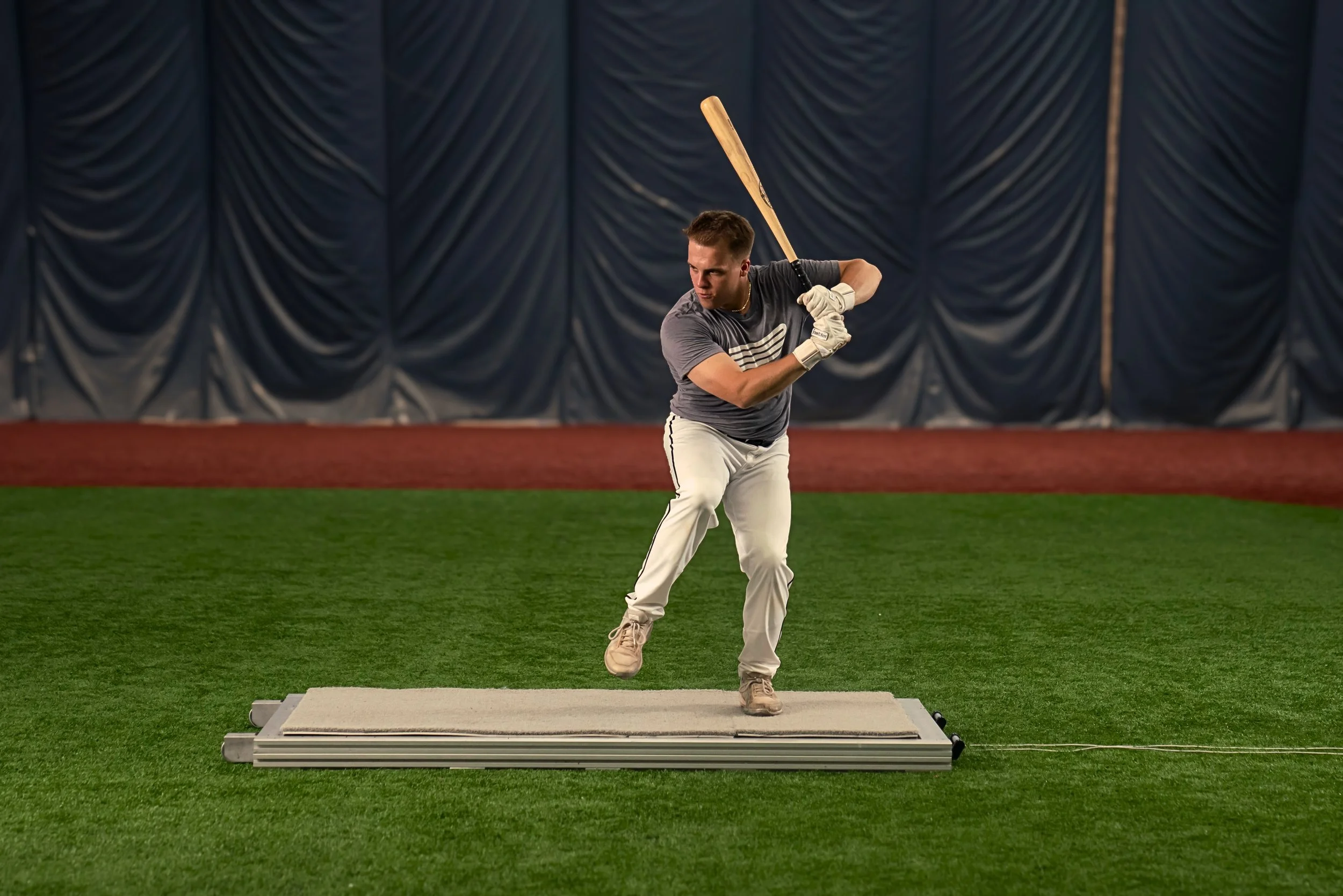
In elite baseball, softball, and golf, the difference between a good swing and a great one often happens below the waist; it comes from the invisible forces that athletes apply to the ground. That’s where Bertec’s Portable Swing Station® changes the conversation. By measuring ground reaction forces (GRFs) from each leg, coaches can finally see how athletes create, transfer, and control power through every phase of the swing.
1. Using Ground Reaction Force Data to Reveal Swing Power
Force plates show how an athlete interacts with the ground: from the vertical drive that launches the body, to the horizontal shift that fuels rotation, to the lateral stabilization that keeps contact precise.
Horizontal ground forces, not just vertical ones, can highlight critical aspects of how efficiently a hitter channels lower-body energy into rotational power.
A 2023 study of 30 collegiate baseball players found that “the horizontal GRF variables of the stride foot were significantly correlated with mechanical energy inflow into the lower torso from the hip joint of the stride foot side”. This insight helps coaches see beyond “leg drive” as a single concept and focus on where and how athletes apply force throughout the swing.
A swing might appear explosive to the naked eye, but force data could reveal hidden mechanical deficiencies such as premature unloading or uneven leg contribution. With this information, coaches can address the source of poor performance instead of just the symptoms. When you look at a swing on video, you see motion. When you look at ground reaction force curves, you see energy flow.
2. Analyzing Force-Time Curves to Refine Timing and Sequencing
A force-time curve is the swing’s fingerprint. This data is a precise map of when and how each leg contributes, peaks, and stabilizes. This pattern defines rhythm, coordination, and ultimately power efficiency.
Force plate data reveals whether an athlete’s trail leg peaks too early (releasing energy before contact) or whether the lead leg engages too late (failing to stabilize through impact). Timing errors like these disrupt energy transfer through the kinetic chain, leading to inconsistent bat or club speed.
Research shows how critical this rhythm is. In a study of 29 professional hitters, front-foot ground reaction force timing shifted by just 15–35 milliseconds between successful and missed swings. Even split-second differences in force application can change how efficiently energy moves through the swing.
With the Bertec Portable Swing Station®, coaches can capture these micro-timing shifts, track sequencing patterns, and confirm whether drills truly improve synchronization.
3. Identifying and Correcting Left-Right Asymmetries
Even slight asymmetries in ground reaction force can throw off balance, causing hitters to lose swing consistency or pull off pitches. The Bertec Portable Swing Station® measures each leg independently, revealing imbalance patterns invisible to video analysis.
Even a modest reduction in lead-leg ground-reaction force can throw off their balance during the swing and reduce how fast the ball comes off the bat. By pinpointing these discrepancies, coaches can design targeted strength and coordination drills that restore balance, improving both control and repeatability.
4. Personalized, Data-Driven Training Programs
Force plate data turns coaching from guesswork into strategy by identifying deficiencies like low vertical force, weak horizontal drive, or unstable lateral control.
Lead-foot ground reaction forces reaching up to 170% of body weight have been shown to strongly correlate with higher bat speed, confirming that targeted force improvements directly translate to measurable performance gains. Instead of broad cues such as “use your legs more,” coaches can pinpoint unique movement patterns that limit performance and cater instructions to the athlete.
5. Tracking Swing Development with Longitudinal Force Plate Data
Through longitudinal force data, coaches can benchmark key metrics and track how movement patterns evolve across training cycles or entire seasons. This clarity reveals which strength or technique interventions actually drive measurable gains and which fall short.
Such insight allows programs to validate training outcomes, demonstrate progress to athletes and stakeholders, and continuously refine methods based on real evidence.
At Bertec, we believe progress is more than performance. Turning movement into measurable data empowers coaches, athletes, and organizations to build smarter, train deeper, and elevate what’s possible.